

Image
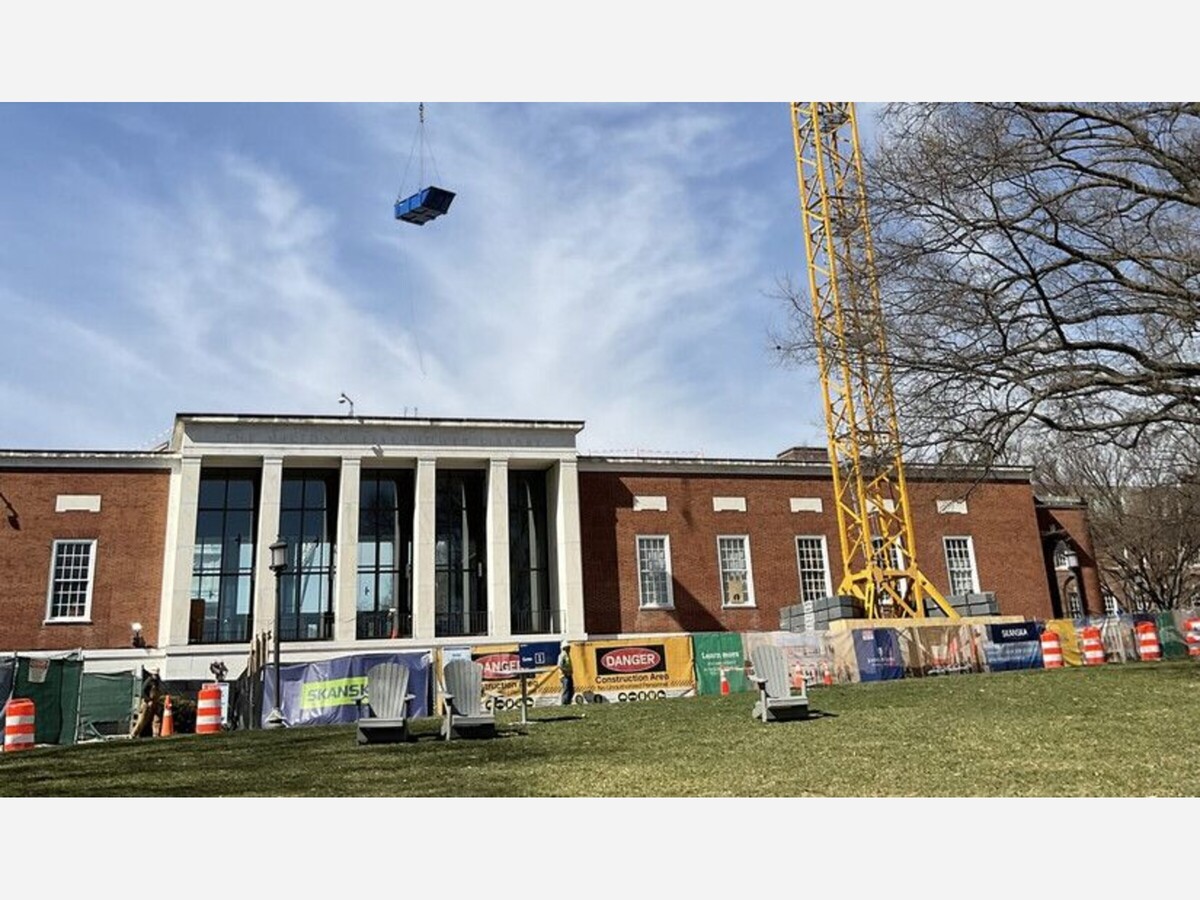
Interior reconstruction begins at Eisenhower Library
With demolition complete, the project enters an exciting new phase as the library’s reimagined interior begins to take shape
 Liz Mengel, Chris Manis, Cecilia Etzel, Dean Elisabeth Long, and Sylvester Jackson review the newly installed rails for the moveable shelving system on Eisenhower Library's D Level. (WILL KIRK / JOHNS HOPKINS UNIVERSITY)
Milton S. Eisenhower Library has reached a defining moment in its multiyear transformation. Demolition is complete, and the project has officially shifted into interior reconstruction. This marks the moment when the work moves from clearing away outdated systems and structures to actively building the spaces that will shape the building’s future.
That shift was celebrated in December, when the construction team led by Skanska USA and project partners gathered to celebrate the pouring of the concrete foundation on D Level. This milestone marked the first major structural element to rise after 18 months of extensive demolition and subgrade preparation. With the foundation in place, the project enters its final year, on track to reopen for the Spring 2027 semester. While major construction projects can encounter unexpected challenges, work remains aligned with that goal.
“What excites me most about this moment is the energy and possibility it brings,” said Elisabeth Long, dean of the Sheridan Libraries & University Museums. “For so long, this project lived in drawings and conversations. Now our students, faculty, and staff can truly begin to imagine themselves in these new spaces and picture how Eisenhower Library will be part of their everyday academic lives.”
 The Grand Reading Room under construction in January 2026. (WILL KIRK / JOHNS HOPKINS UNIVERSITY)
 Rendering of the renovated Grand Reading Room on C Level, offering students brighter and more spacious quiet study areas. (PFEIFFER, A PERKINS EASTMAN STUDIO)
 This view on Q Level toward the new Event Hub and Brody Learning Commons shows openings boarded while window restoration work progresses offsite. (WILL KIRK / JOHNS HOPKINS UNIVERSITY)
 Rendering of the renovated Q Level, looking toward the new Event Hub and Brody Learning Commons, with restored windows, flexible seating, and a bright new study environment. (PFEIFFER, A PERKINS EASTMAN STUDIO)
When the library reopens, visitors will step into a completely reimagined interior that is brighter, more accessible, and designed to support modern library services and contemporary approaches to research. Over the coming months, those changes will become increasingly visible as framing, circulation routes, and architectural features take shape throughout the building.
Every design choice reflects over a decade of conversations with the Hopkins community. Increased daylight, inviting and flexible study and work spaces, intuitive pathways, and a commitment to long-term sustainability all respond to how our students, faculty, and researchers work now while preparing the library for the decades ahead.
“It’s incredibly rewarding to see a decade of ideas and conversations turning into real spaces you can walk through,” said Cecilia Etzel, director of library facilities and planning for the Sheridan Libraries & University Museums. “When I look around these iconic levels of the building today, I see exciting new features like the skylights, wishbone staircase, and double-height reading room taking shape.”
 Construction crews install framing for the new Grand Staircase in January 2026.
 Rendering of the glass‑enclosed Grand Staircase, showing a view from A Level looking up to M Level and down to B and C Levels, opening up sightlines and bringing daylight deep into the building. (PFEIFFER, A PERKINS EASTMAN STUDIO)
 With drywall on site, the library’s reimagined research and instructional spaces are beginning to take shape. (WILL KIRK / JOHNS HOPKINS UNIVERSITY)
Progress on other floors is bringing new possibilities into view as purpose‑built, thoughtfully designed rooms begin to take shape. On A Level, a new research center for traditionally print‑intensive disciplines is emerging, complete with adjoining seminar rooms that support close, hands‑on work with large‑format texts, specialized print materials, and other physical volumes used in instruction. On D Level, crews are installing the moveable shelving system that will accommodate a higher density of books than traditional stacks.
“Every day, each construction milestone brings us closer to a brighter, more welcoming building for our community,” said Etzel.



Overcast, with a high of 87 and low of 59 degrees. Overcast in the morning, patchy rain nearby for the afternoon and evening, overcast overnight.