Several pervasive myths surround the legendary career and physical attributes of the most-decorated Olympian of all time, Michael Phelps. While his biomechanics and achievements are extraordinary, media sensationalism has blurred the line between fact and fiction. [1, 2]
Here are the biggest myths about Michael Phelps, completely debunked:
The 12,000-Calorie Daily Diet
The Myth: Headlines during the 2008 Beijing Olympics claimed Phelps ate a massive 12,000 calories a day consisting of mountains of pizza, pancakes, and fried egg sandwiches. [1]
The Reality: Phelps has repeatedly called this story "ridiculous". He clarified that even during his peak 30-hour weekly training blocks, his actual consumption was between 8,000 and 10,000 calories per day. [1, 2, 3]
How it started: A reporter asked him what he ate, and Phelps vaguely guessed a mental list of foods. The reporter did some flawed back-of-the-napkin math and published the staggering 12,000-calorie figure. [1]
The Myth: Viral rumors and edited photos on social media suggest Phelps possesses actual physical webbing between his toes and fingers, giving him an unfair biological edge. [1]
The Reality: Phelps has completely normal human hands and feet. His size-14 feet function like flippers, but only because his hypermobile ankles bend 15 degrees farther than the average swimmer. [1, 2]
He Outswam a Great White Shark
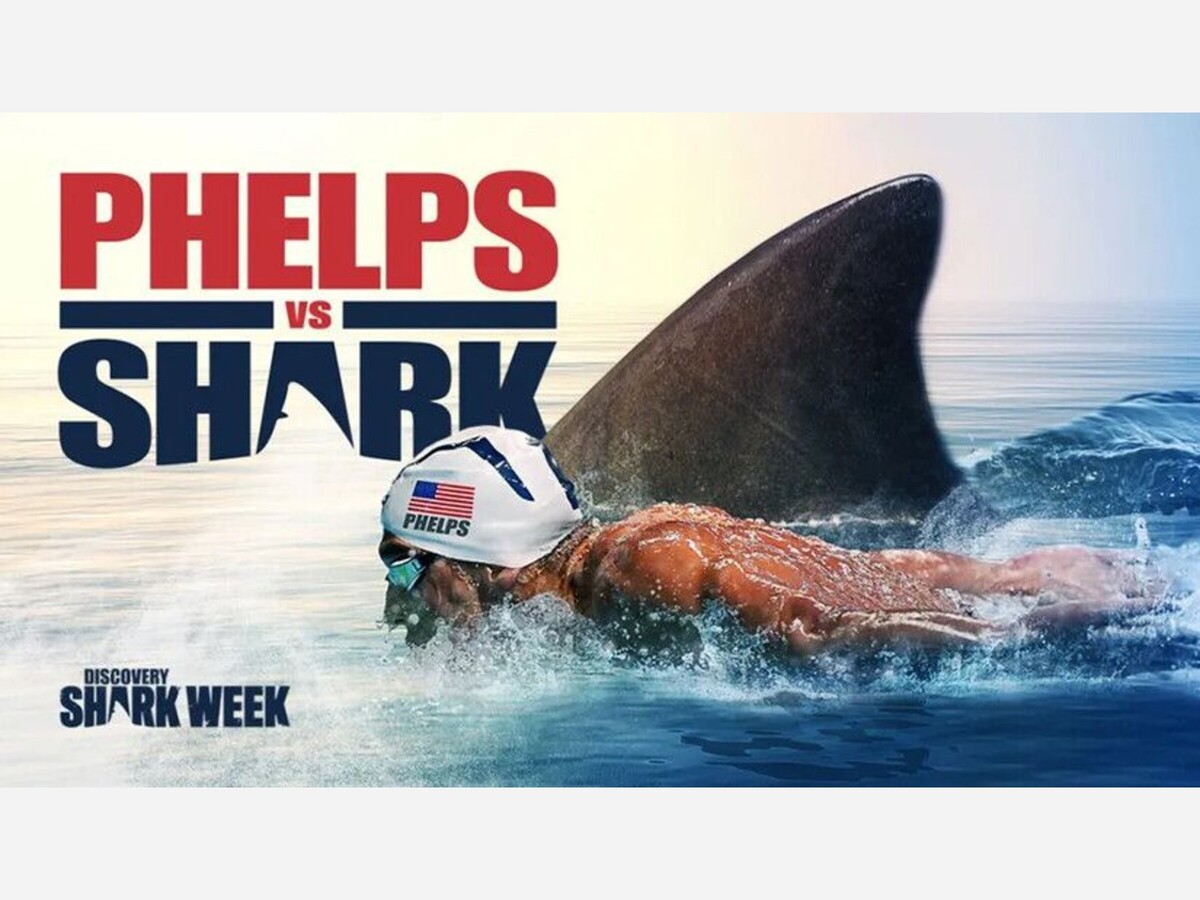
The Myth: In 2017, Discovery Channel's Shark Week promoted a race between Michael Phelps and a Great White Shark, leading viewers to believe he raced alongside the predator and nearly won.
The Reality: Phelps did not race a live shark. For safety reasons, the shark's speed data was recorded separately, and a CGI simulation of the shark was overlaid next to Phelps in the broadcast. Phelps swam a top speed of roughly 6 mph, whereas a Great White can reach speeds up to 25 mph. [1]
His Success Is Purely Due to a "Mutant" Body
The Myth: Popular consensus states that Phelps was an unbeatable "machine" simply because he was born with the perfect biological blueprint for swimming.
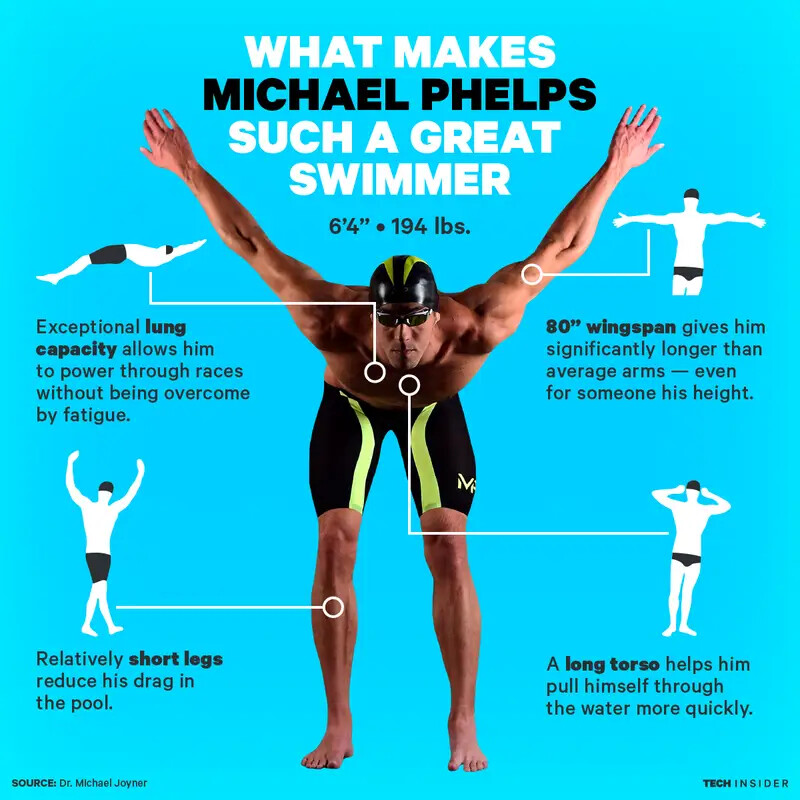
The Reality: While he has genuine genetic advantages—a 6'7" wingspan on a 6'4" frame, short legs that minimize drag, and unusually low lactic acid production—genetics alone did not make him a champion. USA Swimming physicians emphasize that discipline, technique, and a rigorous 20-year work ethic are what maximized his physical potential. [1, 2, 3, 4, 5]
He Was Unstoppable and Untroubled
The Myth: Because he won 28 Olympic medals (23 gold), the public viewed his journey as a seamless, effortless, and mentally untroubled ride to the top.
The Reality: Behind the scenes, Phelps faced severe personal setbacks and struggled deeply with depression and ADHD. Following major Olympic games, he frequently experienced a severe emotional crash, hitting a rock-bottom period in 2014 before checking into rehab and seeking therapy. [1, 3, 4, 5]