

Image
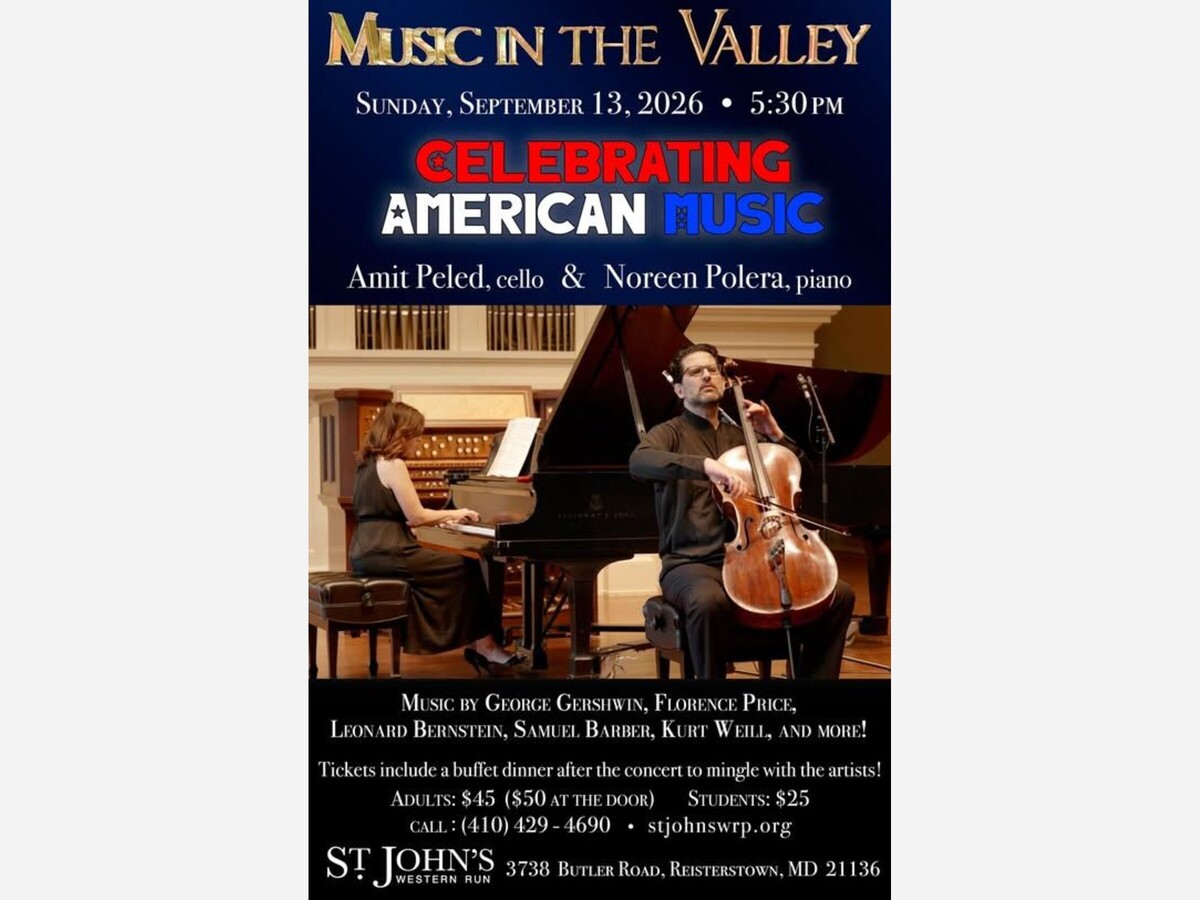
We kick off our 2026–2027 Music in the Valley season with a celebration of American music featuring the cellist Amit Peled with pianist Noreen Polera on Sunday, September 13th at 5:30pm.
The program will include music by George Gershwin, Florence Price, Leonard Bernstein, Samuel Barber, Kurt Weill, and more!As always tickets include a buffet dinner to mingle with the artists after the concert. $50 regular admission ($45 when bought in advance) $25 student admission
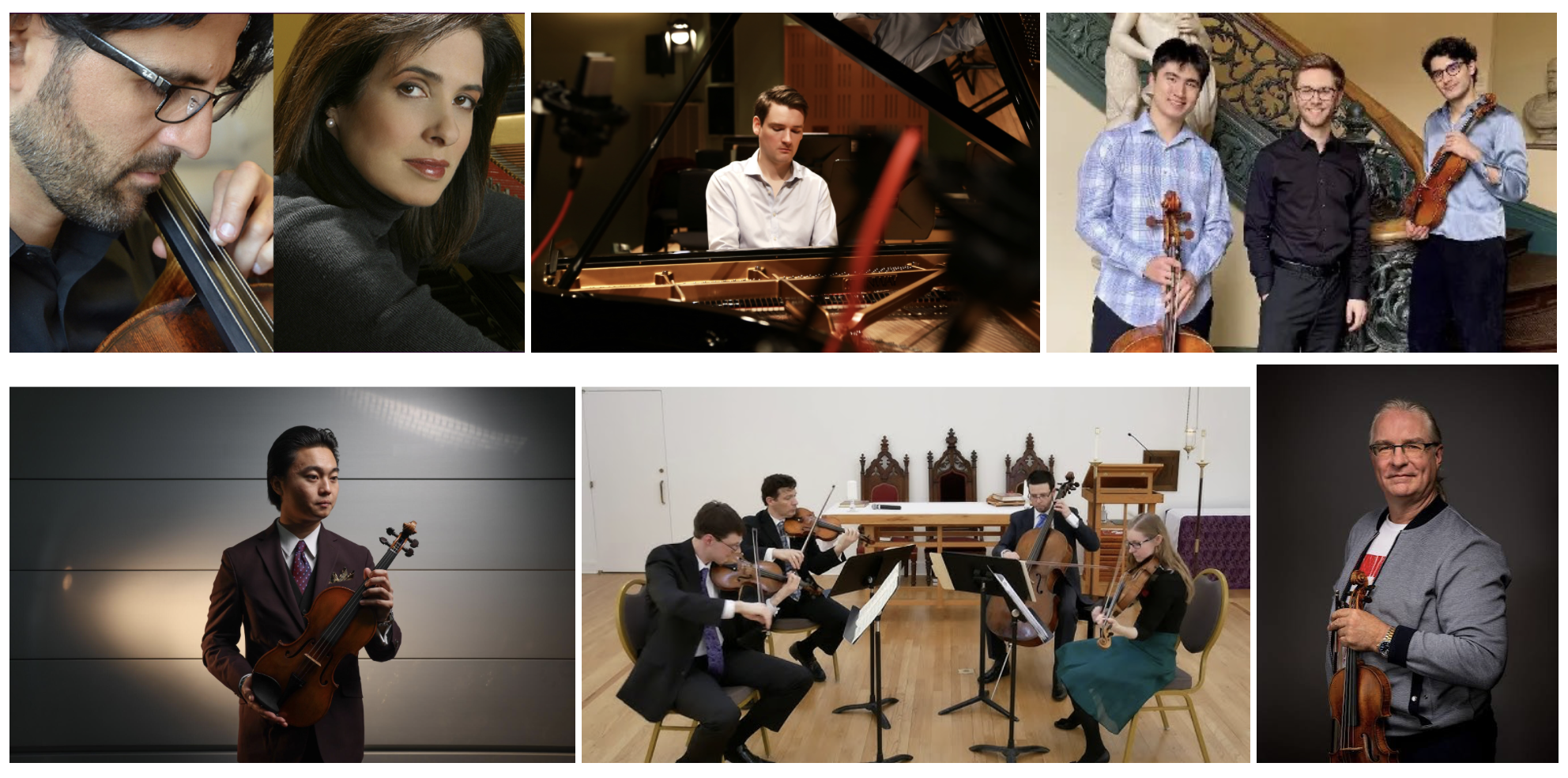
St. John's presents the illustrious Music in the Valley concert series, an endeavor to unify hearts and melodies. Set against the serene backdrop of the St. John's campus, this series offers an exclusive rendezvous with world-class chamber music.
The inception of this treasured series is credited to the vision of Robin Breitenecker. In 2007, her profound love for music, coupled with her vast connections within the Baltimore music community, sowed the seeds for what Music in the Valley is today. We remain ever grateful to Robin for her pivotal role in crafting this unique platform for artists and aficionados alike.
But our evenings aren't just about the melodies. Following each concert, we invite attendees to indulge in a decadent buffet, a feast not just for the palate but also for the soul. This gathering offers a rare opportunity to interact with the very performers who enchanted the audience moments before. The echoing notes of the evening's performance, combined with delightful conversation and sumptuous food, ensure an experience that's cherished by many.
Beyond the artistry and camaraderie, the Music in the Valley series is dedicated to supporting the outreach endeavors of St. John’s Church. Proceeds generated from Music in the Valley are contributed to the St. John’s Mission Commission. It's a testament to how music can not only touch souls but also uplift communities.
To explore the numerous ministries that are enriched through this series, we invite you to visit our Mission Commission page.
We warmly invite you to be more than an audience member. Become an integral part of a musical journey that resonates far beyond our parish hall. Together, let's create concerts that not only uplift the spirit but also serve a greater communal purpose.
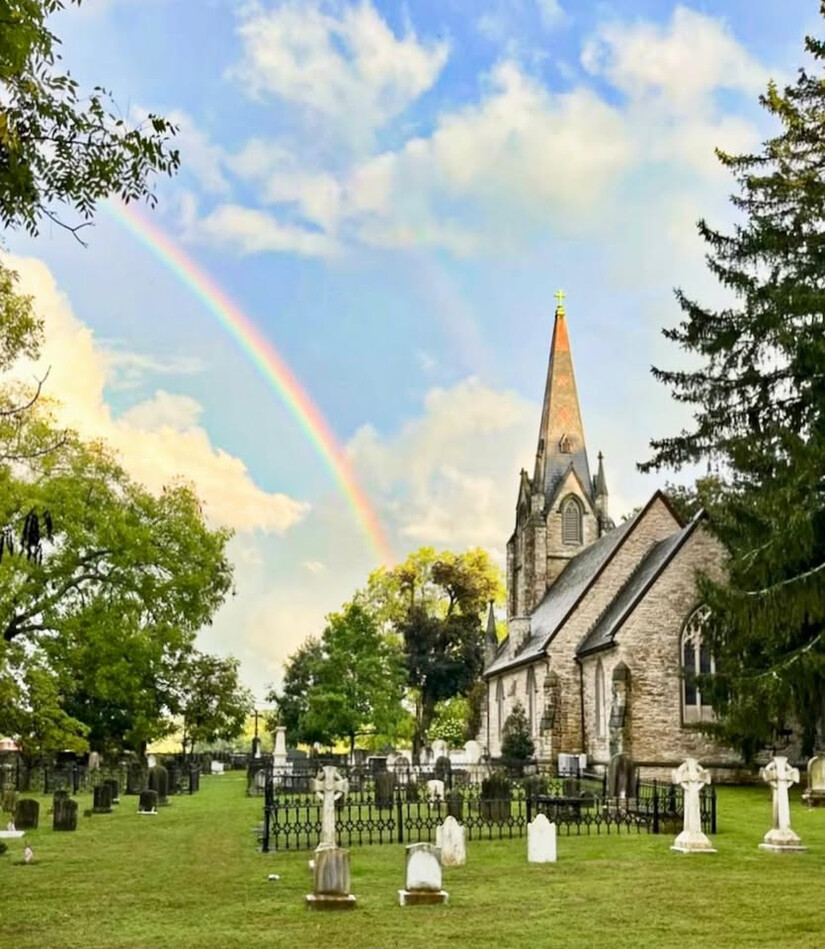
In 1815, the large landowners of the area—the Worthingtons, the Johns, the Gills, the Walkers, and the Johnsons—led the effort to secure an Act of the Maryland Assembly to conduct a lottery to raise funds and build a new “Protestant Episcopal Church” on this site, carved from Charles Walker’s adjacent “Woodburn” estate.
The completed stone building, resembling a large meeting house, seated 300 congregants, including enslaved persons. Although early ministers served short tenures, the Reverend Ethan Allen, and his successor, the Reverend Arthur Rich, ably guided the newly created “Parish of the Western Run” from the late 1840s through the 1850s. In 1842, a leading parishioner donated the stone walls encircling the church and burial ground, as well as the handsome stone rectory.
After disruption in the Civil War, St. John’s reopened in 1865 with the appointment of the Reverend Alexander J. Berger. Berger’s tenure included a disastrous fire on Christmas Eve, 1867. His assiduous leadership of the rebuilding resulted in the magnificent architecture of St John’s Church today.
By the 1890s, the church was struggling and, like the farms of its Valley members, suffered from a dwindling population and meager income. With St. John’s nearing closure, a different group, mostly the new owners of nearby horse farms, took an interest in the parish. Especially through the benefactions of Mr. and Mrs. C. Wilbur Miller, St. John’s came to life again. The church was thoroughly renovated in 1927–29, with new Gothic-style fittings and altar, a pipe organ in the back gallery, and stained-glass windows from the studio of Boston artisan Charles Connick.
In 2021–2022, St John’s was fortunate to work with Jonathan Poston, a lawyer, historian, and preservationist, to uncover lost documents and previously unknown narratives about the people who have called St. John’s their church home during its more than 200 year history. In a lecture on his research (included below), Jonathan explores St. John’s long-standing Christian commitment to being the people of God in this outpost of the kingdom in the face of all kinds of challenges.


Sunny, with a high of 59 and low of 38 degrees. Sunny in the morning, clear in the afternoon and evening,