


Image

Governor Moore Signs Legislation to Prohibit Maryland Jurisdictions from Deputizing Officers for Federal Civil Immigration Enforcement
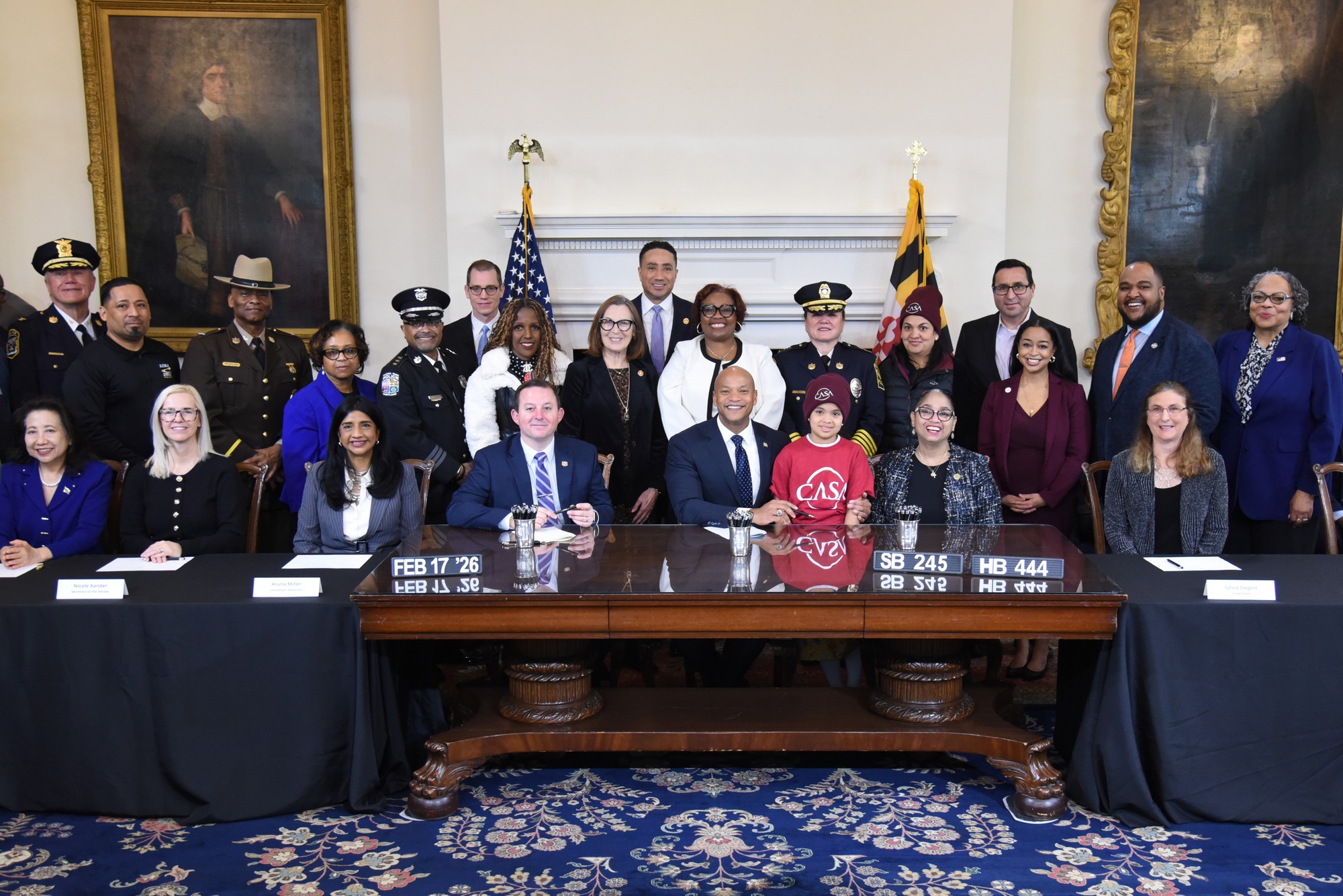
ANNAPOLIS, MD — Governor Wes Moore signed legislation to prohibit State and local jurisdictions from deputizing officers for federal civil immigration enforcement activity. The law, created under SB 245/HB 444, is effective immediately.
“In Maryland, we defend Constitutional rights and Constitutional policing—and we will not allow untrained, unqualified, and unaccountable ICE agents to deputize our law enforcement officers,” said Gov. Moore. “This bill draws a clear line: we will continue to work with federal partners to hold violent offenders accountable, but we refuse to blur the lines between state and federal authority in ways that undermine the trust between law enforcement and the communities they serve. Maryland is a community of immigrants, and that's one of our greatest strengths because this country is incomplete without each and every one of us.”
“As an immigrant, this bill is deeply personal to me,” said Lt. Governor Aruna Miller. “Immigrants make Maryland stronger every day, and our communities are safer when everyone feels protected and valued. This legislation ensures that our law enforcement resources remain focused on keeping Marylanders safe, not on actions that create fear in our neighborhoods. I thank the bill sponsors and Governor Moore for their leadership in ensuring Maryland remains a place where dignity and opportunity go hand in hand.”
U.S. Department of Homeland Security Immigration and Customs Enforcement, also known as ICE, established its 287(g) program to authorize local law enforcement officials to perform federal civil immigration enforcement functions under ICE’s oversight. Under SB 245/HB 444, State and local jurisdictions in Maryland are prohibited from engaging in such agreements. Any local jurisdictions with standing 287(g) agreements must terminate them immediately.
The legislation signed today does not:
State and local law enforcement will also maintain the ability to work with the federal government on criminal investigations and joint task forces unrelated to civil immigration enforcement. Any individual who is charged with a crime is entitled to due process and, if convicted, must serve their sentence.



Patchy rain nearby, with a high of 91 and low of 73 degrees. Patchy rain nearby during the morning, overcast for the afternoon and evening, clear overnight.