


Image
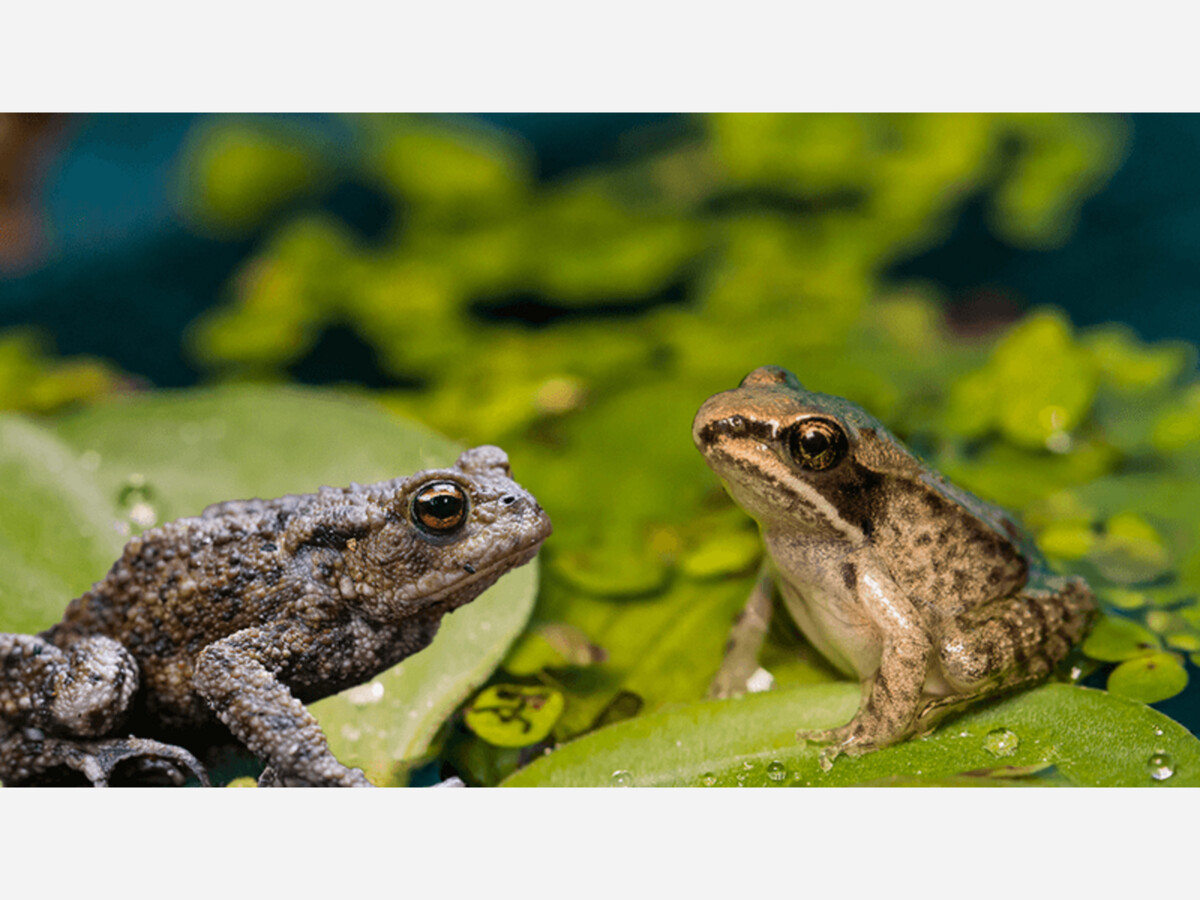
The beginning of spring awakens buzzing bees, blooming flowers and one of the season's earliest risers, the croaking frog ... or is it a toad? Frogs and toads are both amphibians in the order Anura, called anurans. Scientists actually categorize toads as a type of frog. Generally, they follow the rule that all toads are frogs, but not all frogs are toads. Both amphibians are also indicator species, which means that their health reflects their habitats' health. Frogs and toads are an essential part of the food chain, which makes them a vital part of their ecosystems.
Despite all these similarities, they do have some big differences that set them apart.
There are several visual cues to look for when distinguishing between frogs and toads.
Frogs have thin, permeable skin that lets them absorb water and oxygen. A layer of mucus helps keep frogs moist and makes them feel slimy. On the other hand, toads have dry, thick skin. The thickened skin of their upper body helps them retain water so they can live in drier habitats. Toads usually absorb water through the thinner skin of their bellies.
Skin moisture, skin texture and leg length are a few of the more visually apparent differences between frogs and toads—but they're certainly not the only ones.
Each frog and toad species has a unique song or call males sing to attract females during the breeding season. Most frogs and toads produce calls by filling their throats with air to inflate an air sac like a balloon. But some frogs have vocal sacs on the sides of their head. During the breeding season, male toads will let out a long trill call to attract female toads, which is longer and more melodic than the typical frog call.
Toads are often found in dryer terrestrial habitats than frogs because their thicker skin helps to retain water. Frogs lose more water through their skin, so they often live closer to aquatic habitats.
Frogs typically lay their gelatinous eggs in masses under the water's surface, while toads lay eggs in long, floating strands.
A frog's tadpole stage is often much longer than a toad's. In northern climates, bullfrog tadpoles can take as long as two years to grow and metamorphose into frogs. Depending on water temperatures, tiny black toad tadpoles can hatch in a few days and metamorphose into tiny toadlets in only four weeks. Toads sometimes lay their eggs in puddles or even water-filled tire ruts on dirt roads, so they must develop quickly before these temporary aquatic habitats dry up.
Despite their differences, both frogs and toads are in danger. From habitat destruction to a crisis-level fungal disease called chytridiomycosis, these amphibians need our help. One way to help protect these amphibians is to make space for them in our yards, community parks and other green spaces. For example, you can make a toad abode by creating a hole in the rim of a flowerpot and turning it upside down. Or you can place slabs of tree bark, curve side down, in shaded, mulched areas of gardens to provide a moist daytime refuge for toads. Both options provide shelter and shade for the amphibians that find it.



Sunny, with a high of 81 and low of 61 degrees. Sunny during the morning, patchy rain nearby during the afternoon and evening, clear overnight.