57° and Clear



Image
A world traveler pauses in the Chesapeake
The bobolink is a small, migratory songbird that spends its breeding season in the Chesapeake region each year
By Bianca Martinez Penn, chesapeakebay.net
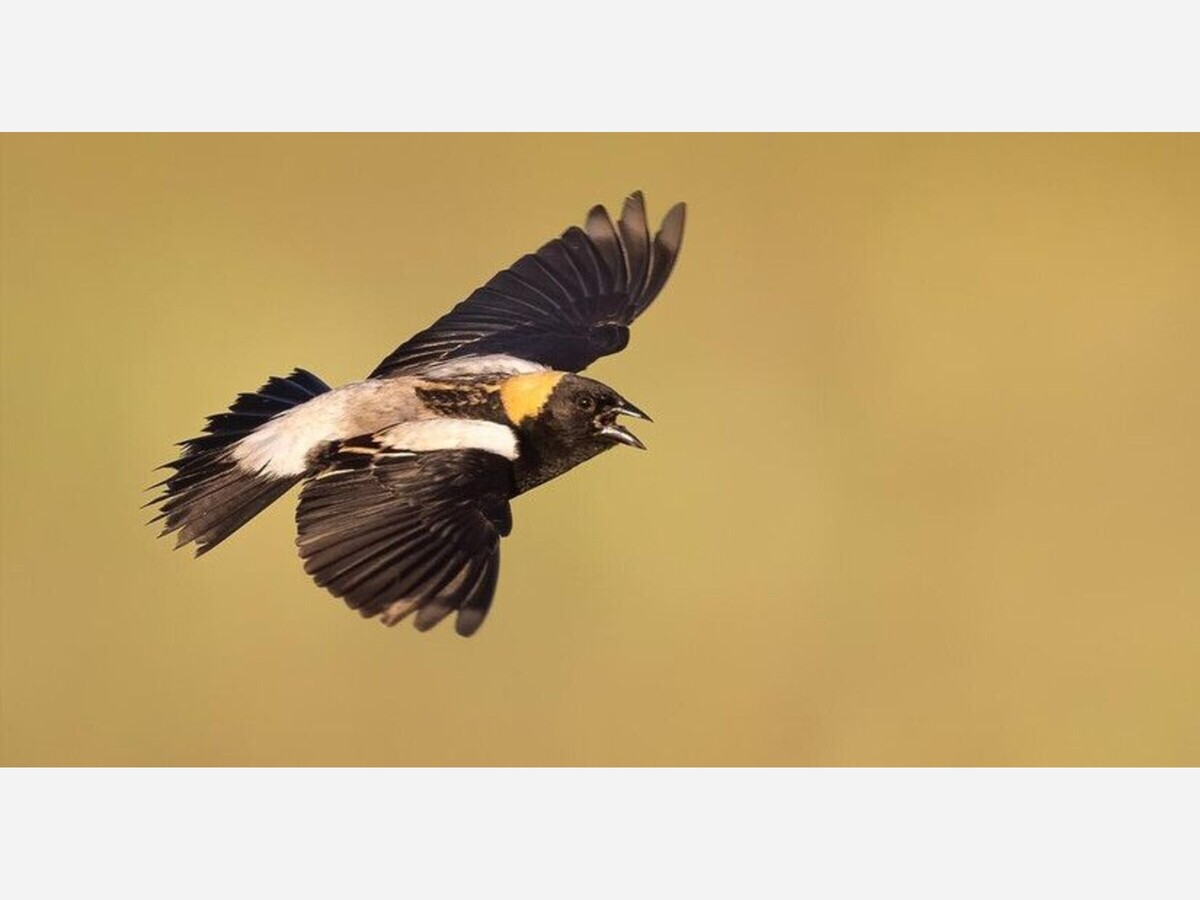
 The bobolink is a migratory species that travels from South America to the Chesapeake region each year. (Photo courtesy of Kyle Tansley/iNaturalist CC BY-NC, cropped)
Each year, the Chesapeake Bay region is a stop for dozens of different bird species on their migratory journeys. Whether it's waterfowl spending the warmer winter months here or songbirds singing in the summer warmth, there is no shortage of visitors to spot in the sky. One species in particular, the bobolink makes a much longer journey than most to make the area its home for the summer.
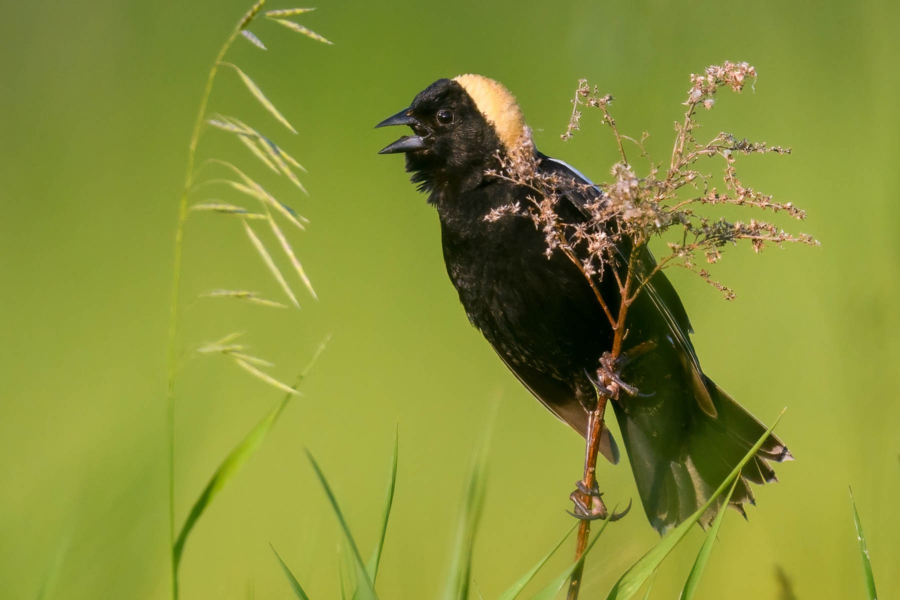
Arriving in the late spring after a long trip from the southernmost lands of South America, the bobolink brings the warm weather with it. Upon arrival, breeding males will molt from their warm brown plumage to striking black coloring to separate themselves as potential mates for females. In addition to their attractive colors, male bobolinks will display courtship through low flight patterns over grasslands while singing.
Bobolinks are polygynous, meaning males will often mate with up to 4 females. Females also often mate with multiple males, with their clutches of 3-7 eggs often representing multiple fathers. Clutches are incubated solely by the female for 10-13 days, and hatchlings rely on their parents for food for the first couple of weeks.
While the male visits each of their mates’ nests to help with the hatchlings, they will spend the majority of their time with their primary mate, which is usually the first bird they mate with. After about 14 days, fledging bobolinks will leave the nest to begin foraging for themselves, although they will not be able to fly for another month or so. This period of time allows them to learn to hide from predators in tall grasses while they search for food.
Perhaps the most remarkable thing about the bobolink isn’t what it does in the Chesapeake, but how it gets here. Coming from the furthest points in South America for the summer months, the bobolink is one of the world’s most outstanding songbird migrants. Traveling about 12,500 miles to and from South America each year, the average bobolink will have traveled the equivalent of 4-5 times the earth’s circumference in its 4-9 year lifetime.
Bobolinks rely on healthy habitats with tall grasses such as meadows for their survival. Over the last 50 years, their population has declined significantly due to habitat loss and development. In South America, the species is often also trapped and sold as pets or food. Because of this decline, bobolinks have been listed as a threatened species by the IUCN Red List.
As the weather warms in the Chesapeake region, keep your eyes out for the varying appearances of the bobolink while it’s here!
To learn more about the bobolink and other birds in the Bay region, visit our field guide.

Bianca Martinez Penn
bmartinezpenn@chesapeakebay.net
Bianca is a 2023 graduate of the University of Miami where she earned a bachelor's degree in sociology with minors in both marine policy and sustainable business. In 2022, Bianca was a C-StREAM intern working with the Chesapeake Bay Program's Diversity Workgroup.
View all stories by this author



Sunny, with a high of 69 and low of 46 degrees. Sunny during the morning, clear for the afternoon and evening,